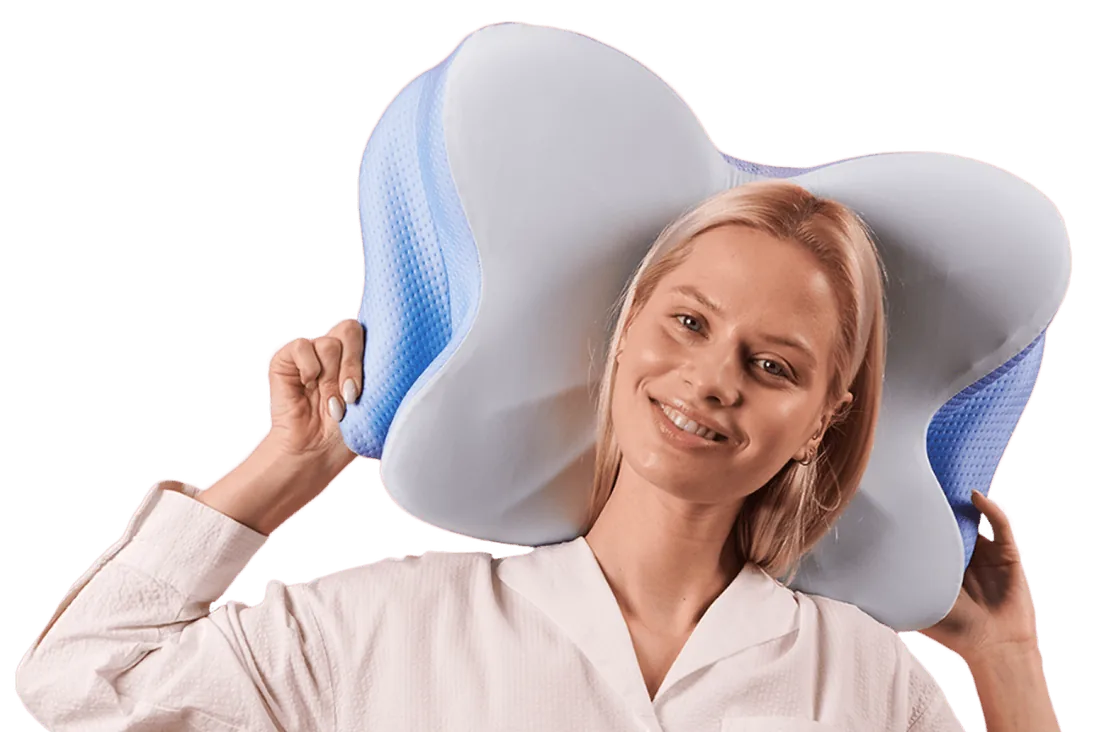
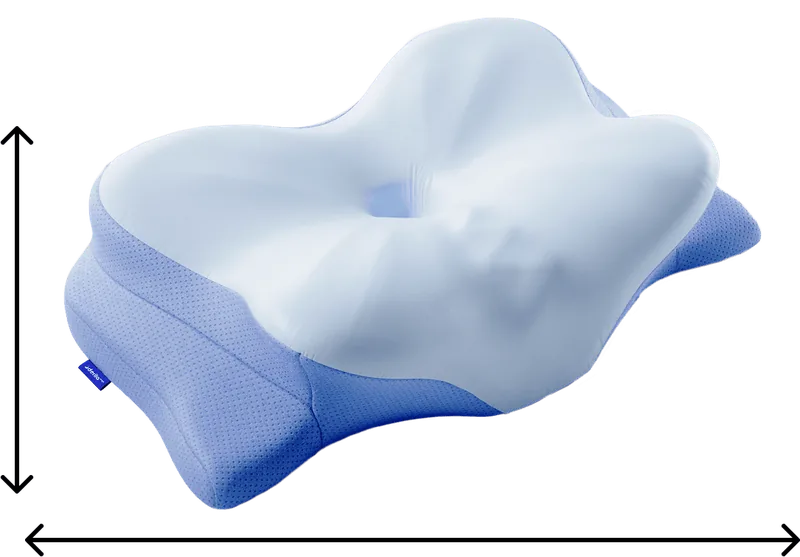
Most pillows are a rectangle of stuffing. This one is engineered around the way your head, neck, shoulders and arms actually rest — with five distinct support zones, memory foam, and a breathable, cooling-feel build. Here is everything it offers, where it falls short, and what to check before you click through.
Product imagery from the manufacturer's official page.

Pillow shopping usually turns into a debate about firmness. The butterfly design shifts the question: instead of one uniform surface, the pillow has distinct areas for the head, the neck, the shoulders and the arms — each shaped for the job it does.
The idea, as the manufacturer describes it, is that every curve follows the body's natural outline so your head and neck have somewhere sensible to rest in whichever position you end up in. Whether that suits your body is something only a few nights on it can tell you, which is where the trial period comes in.
Three words sum up the brief: comfort, support, ergonomics.
Why a standard pillow can feel fine at 10 p.m. and very different by morning.
Loose fill compresses through the night, so the shape you started with isn't the shape you end with. Every time you turn over, you rebuild it with your hands — half asleep — and the support you set up at bedtime quietly disappears.
Support zones are built into the foam itself, with a central core designed to retain its shape. The curves are fixed by design rather than by how you plumped it, so the pillow is the same at 3 a.m. as it was at bedtime.
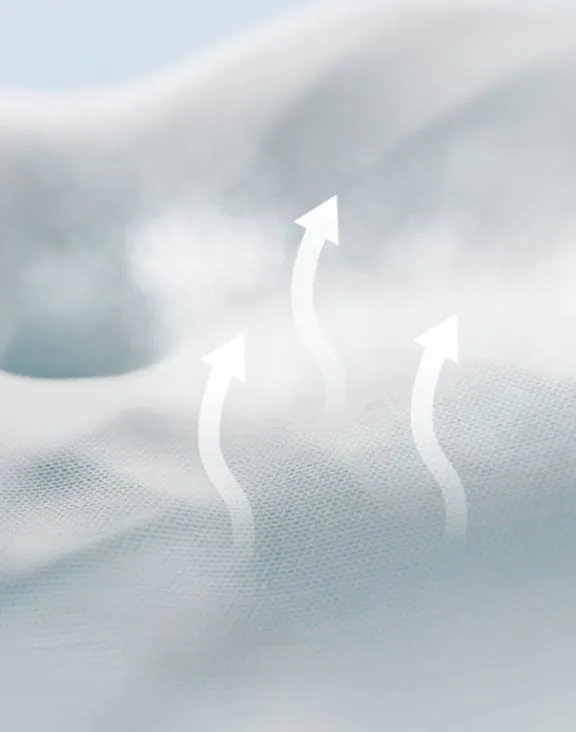
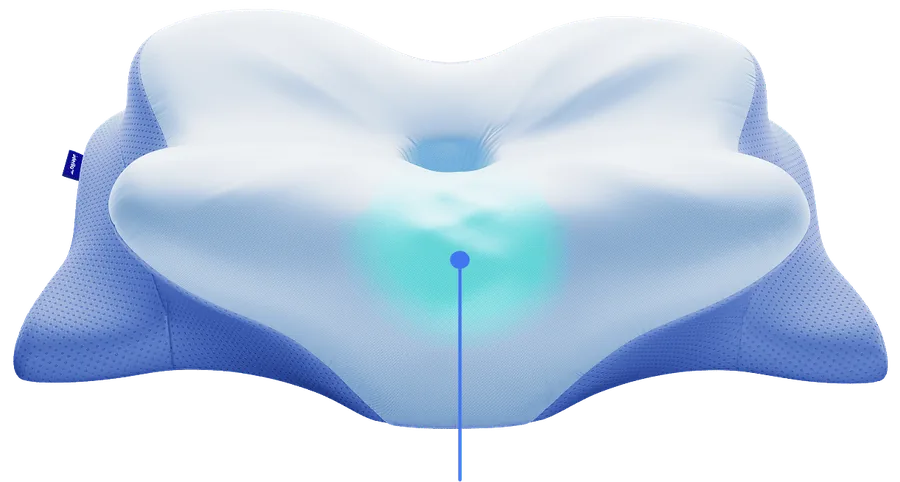
Memory foam has a reputation for holding heat. The manufacturer addresses that with a breathable construction and what it describes as a cooling effect, designed to disperse warmth rather than trap it against your head.
In practice that means a pillow that should feel pleasantly cool on contact and stay closer to a comfortable temperature through the night. Individual experience depends on your room, bedding and body, but it is a design priority rather than an afterthought.
Premium memory foam is the core material. It contours to the shape of your head and neck rather than pushing back against it, which is why the pillow feels soft at first touch while still holding a defined form.
The manufacturer positions it as adaptive, overnight comfort — a soft landing that doesn't collapse. If you prefer the airy feel of feathers or the springiness of fiber fill, foam will feel different, and it's fair to give yourself several nights before judging it.
The pillow is marketed as complete support in any position — including for people who never stay in just one.
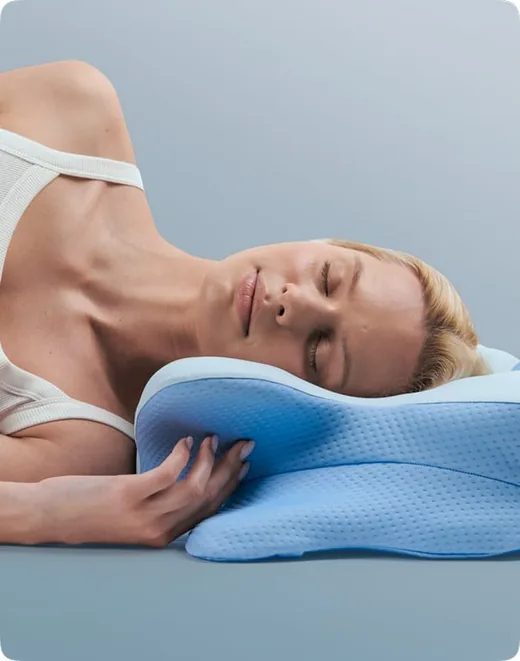
The raised wings and shoulder arch are meant to fill the space between ear and shoulder, while the wide base gives your lower arm room instead of pinning it under you.
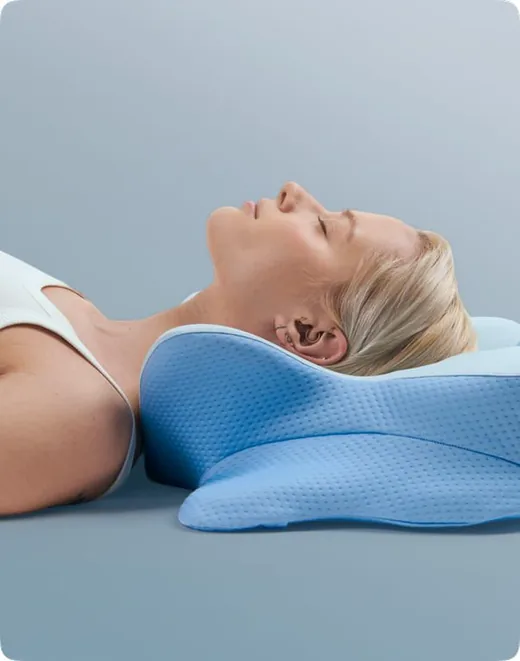
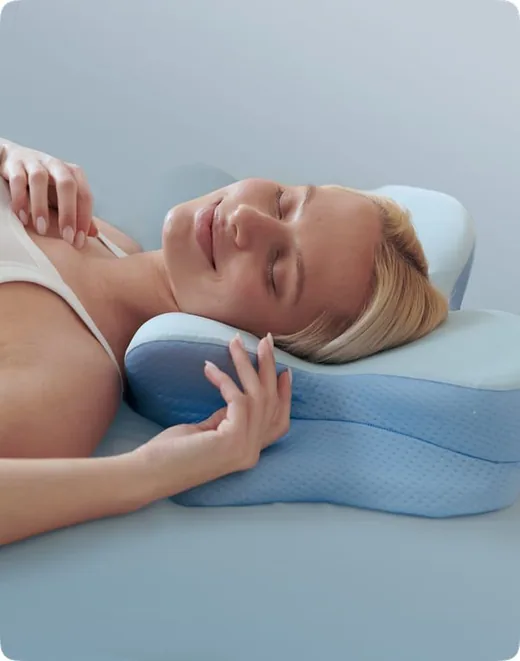
The central core cradles the back of the head, with a gentle chin rest at the front and support wings at either side to help keep you from rolling out of position.
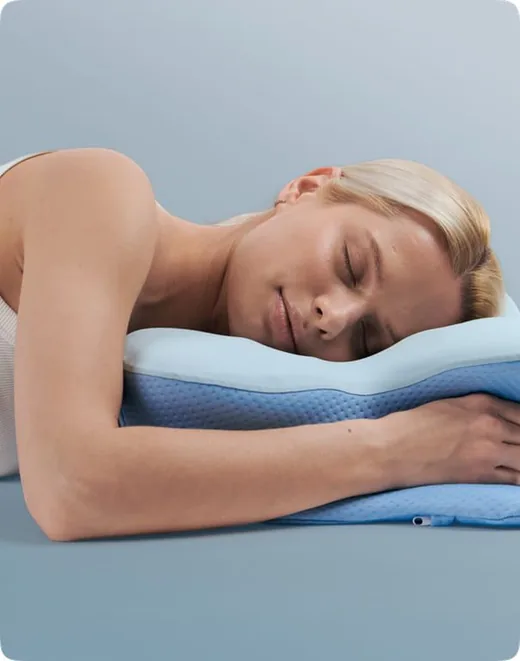
The shaped surface and arm-support area give the head and shoulders a place to rest while you lie face-down, rather than forcing a fully flat, stacked pillow.
If you start on your back and end on your side, the pillow is designed so every position has something to rest on, with no re-plumping or hunting for a better angle.
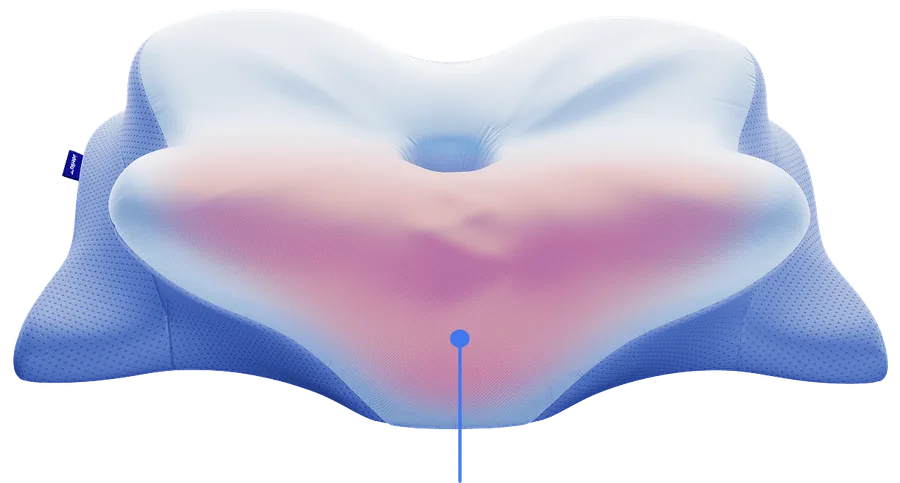
Comfort, support and ergonomics broken down area by area, exactly as the manufacturer lays out the design.
Raised sections on either side of the central area, aimed at back sleepers. They act like soft bumpers that help your head stay in position, so you're less likely to drift sideways as you doze off.
The forward-facing wings give your face and jaw area a place to rest when you sleep on your side or lean forward. They're part of what makes this look so different from a standard rectangle.
An arched section lets your shoulder sit comfortably into the pillow instead of being pushed up against it. For side sleepers especially, this is the detail that changes how the pillow sits relative to the mattress.
The middle section is where your head rests, and it carries the pillow's most practical details: a built-in chin rest, a gap for headphones, and a core designed to retain its shape night after night.
A wide pillow base gives your arms somewhere to go. Instead of tucking a hand under a narrow pillow, you can lay it across the surface, in whichever position you've ended up in.
Zone names and benefits as listed by the manufacturer. Comfort and fit are personal; this is a comfort product, not a medical device.
The manufacturer's own footage — the butterfly shape, the support zones and how it sits on a bed.
Footage © the manufacturer, embedded from its official product page.
The full feature set as published by the manufacturer — nothing left out, no fluff added.
Wings, arch and core built into a single piece, so the shaping doesn't depend on how you arrange it.
Contouring foam that is soft on contact while holding a defined form through the night.
A breathable design the manufacturer says disperses heat, aimed at a comfortable sleeping temperature.
The central core is designed to keep its form rather than sink and flatten as the night goes on.
Two small details that matter in real life: somewhere comfortable to rest your chin and room to wear headphones lying down.
A shaped cut-out that gives your shoulder room, particularly helpful if you sleep on your side.
Extra surface area for your arms, so you can sleep without tucking a hand underneath.
The manufacturer lists a 60-night trial with returns handled through its support team — confirm the terms at checkout.
A shaped pillow is a change. The manufacturer says most people notice a difference quickly and that full adaptation takes about five to seven nights — individual experience varies.
Rest your head in the central core and let the wings settle around you. Spend a moment noticing where your shoulder and arm fall.
The contoured shape feels different from a flat pillow. Try a couple of positions and see which zones you naturally use most.
By the end of the first week you should have a good sense of whether it suits you — with weeks of the 60-night trial still ahead.
| Feature | Derila Ergo | Typical Category Average* |
|---|---|---|
| Shaped zones for head, neck, shoulders & arms | 5 built-in zones | Usually a single flat surface |
| Designed for side, back & stomach sleeping | Yes | Often optimized for one position |
| Shoulder arch cut-out | Yes | Rare |
| Chin rest & headphone gap | Yes | Rare |
| Core material | Premium memory foam | Varies: fiber, down, foam |
| Cooling-feel, breathable build | Yes, per manufacturer | Varies by model |
| Keeps its shape overnight | Designed to | Often needs re-plumping |
| Trial period | 60 nights (mfr. terms) | Often 30 days or none |
*General category comparison based on manufacturer-published specs; not an independent lab test. Always confirm current specs on the official site before buying.
36 cm / 14.1 in
54 cm / 21.2 in
Bundle contents, cover options and add-ons vary by offer — confirm exactly what's included on the official page.
Switch between side, back and stomach positions, want a pillow that keeps its shape, and don't mind a few nights of getting used to a contoured design.
Contoured memory foam feels different from fluffy pillows. Some people love it from night one; others need the better part of a week to adjust.
You like a very flat, squishy pillow you can scrunch into shape, or you're after a medical device rather than a comfort product.
| Design | Butterfly-shaped ergonomic pillow with 5 support zones |
| Zones | Back support wings · front support wings · shoulder arch · central core · arm support area |
| Core material | Premium memory foam |
| Temperature feel | Breathable, cooling-feel construction |
| Dimensions | 54 × 36 cm (21.2 × 14.1 in) |
| Positions | Side, back, stomach and combination sleepers |
| Details | Chin rest · headphone gap · shape-retaining core · wide base |
| Trial & returns | 60-night trial period · returns via the merchant's support team |
Specs as published by the manufacturer at the time of writing — confirm current details on the official product page.
You'll land on the merchant's official offer page. Here's exactly what to look for so there are no surprises at checkout.
The manufacturer says most people notice a difference in comfort from the first night, with the full adjustment to a contoured shape typically taking around five to seven nights. That's an honest range: if you're switching from a very flat pillow, expect an adjustment period.
The manufacturer lists a 60-night trial period. If you're not satisfied, you contact its support team to arrange a return and refund. Policies can change, so read the exact terms on the official checkout page before ordering.
It combines several things in one piece: a butterfly shape, five defined support zones, a shape-retaining core and a breathable, cooling-feel build. Most standard memory-foam pillows are a single contoured or flat block without the shoulder arch, chin rest or headphone gap.
That's the design goal. The wings, shoulder arch, central core and arm area are meant to give each position something to rest on. Comfort is personal, though, so use the trial period to find out which zones work for you.
The manufacturer recommends two — for example one for home and one for travel, or a spare while the other is being washed. That's a convenience suggestion, not a requirement. See the current options on the official page and choose what fits your situation.
It measures 54 × 36 cm (21.2 × 14.1 in). Because of its shaped design, standard cases may fit differently, so check what the official page offers for covers.
Three things worth knowing going in: the contoured shape needs a few nights to get used to; memory foam has a different feel from down or fiber fill, which some people simply prefer; and it's a fairly large pillow, so check it suits your bed. None are dealbreakers for us, but you should know them before buying.
No. It's a comfort product designed around ergonomics. It isn't intended to diagnose, treat or cure any condition, and individual results vary. If you have a neck, back or other health concern, talk to a healthcare professional about sleep positioning.
You'll go straight to the official product page — current bundles, shipping terms and the 60-night trial are all listed there before you pay.
See The Current Offer On The Official SiteThis page is an independent review of Derila Ergo. It is not the official Derila Ergo website, and it is not operated by, affiliated with, or endorsed by Derila or its manufacturer. The Derila Ergo name and related trademarks belong to their respective owners and are cited for identification only.
We participate in affiliate marketing programs. If you make a purchase through a link on this page, we may earn a commission at no additional cost to you. This relationship does not influence the accuracy of the information presented, but it is a reason we recommend confirming details independently before buying.
Pricing, bundle offers, promotional discounts, shipping terms, and return policies are set by the merchant and can change without notice. Always confirm the current price and terms on the official checkout page before completing a purchase.
This is a comfort product. It is not evaluated by the FDA and is not intended to diagnose, treat, cure, or prevent any disease. Individual results vary. If you have a health condition, consult a healthcare professional.